
Starts with you
Your own immune cells are the starting point for a treatment made individually for you.
Explore CAR-T cell therapy in India at Cytecare Hospitals, Bengaluru. When blood cancer returns, our care coordinators help you connect with specialists to understand your next option.
Report review first. An informed decision next.
Specialist cancer care in Yelahanka, BengaluruUNDERSTANDING CAR-T
CAR stands for chimeric antigen receptor. It helps your own T-cells recognise a target that cancer cells carry.
Your immune system has cells called T-cells whose job is to find and destroy anything that should not be in the body. Some blood cancers survive because they have learned to hide from them.
CAR-T therapy takes a patient’s own T-cells, modifies them in a laboratory so they can recognise the cancer, and returns them to the body as a living medicine. It is a single, individually manufactured treatment — made from and for one patient.
Your own immune cells are the starting point for a treatment made individually for you.
A laboratory adds a receptor to help your T-cells recognise a specific marker.
The modified cells can recognise and attack B-cells carrying the CD19 marker.
A specialist decision, always. CAR-T is considered for certain blood cancers that return or do not respond to treatment. It is not suitable for every patient, and outcomes vary.
YOUR TREATMENT JOURNEY
From your first conversation to follow-up care, explore how CAR-T treatment is planned around you. Your care team explains the choices and supports each stage.
STEP 01 · Specialist review
Your reports, health and previous treatment help specialists decide whether CAR-T could be appropriate.
The team reviews your diagnosis, previous treatments, organ function and overall health. You can discuss possible benefits, risks, alternatives and an individual cost estimate before making plans.
Bring your recent reports and a list of treatments and medicines.
A personalised assessment
STEP 02 · Cell collection
A process called apheresis separates T-cells from your blood and returns the other blood components.
The care team explains how collection works and checks whether you are ready. A collection machine separates the cells needed for manufacturing; the rest of your blood is returned to you.
Ask about collection time, access to a vein and practical arrangements.
Your cells, carefully identified
STEP 03 · Cell engineering
In a specialist laboratory, a new receptor is added to the collected T-cells.
This receptor gives the cells a way to recognise a target on certain cancer cells. The target and treatment depend on the CAR-T product selected for your condition; your specialist explains which option is appropriate.
Ask which treatment and target are being considered for your diagnosis.
A treatment made from your cells
STEP 04 · Growth & checks
The engineered cells are grown and checked before the treatment can be released for use.
The laboratory expands the engineered cells and performs quality checks. Manufacturing takes time and may not always succeed. Your team plans any treatment needed during the wait and keeps you informed.
Discuss the expected wait and whether you may need treatment during it.
Checks before treatment is released
STEP 05 · Infusion & monitoring
After preparatory treatment, CAR-T cells are infused through a vein and the team monitors you closely.
Preparatory chemotherapy is usually given before infusion. CAR-T can cause serious side effects, including immune reactions and neurological effects, so close monitoring and prompt specialist care are essential.
Confirm your hospital stay, caregiver support and when to seek urgent help.
A team watching for side effects
STEP 06 · Follow-up care
Regular reviews help the team assess your response, recovery and longer-term needs.
Your follow-up plan may include blood tests, scans and reviews of infection risk or other side effects. Response varies from person to person. Keep follow-up appointments and contact your team if new symptoms appear.
Leave with your follow-up schedule and a clear contact plan.
A plan for the months ahead
Your reports, health and previous treatment help specialists decide whether CAR-T could be appropriate.
A process called apheresis separates T-cells from your blood and returns the other blood components.
In a specialist laboratory, a new receptor is added to the collected T-cells.
The engineered cells are grown and checked before the treatment can be released for use.
After preparatory treatment, CAR-T cells are infused through a vein and the team monitors you closely.
Regular reviews help the team assess your response, recovery and longer-term needs.
Treatment availability, timing and response vary. Specialists assess eligibility and explain the benefits, risks and alternatives; this illustration is a general guide.
HEAR FROM CYTECARE
Watch Cytecare Hospitals explain the science and discuss treatment options. Play any video here, at your own pace.
START WITH THE BASICS
An introduction to CAR-T cell therapy from Cytecare Hospitals.
EXPLORING CELLULAR THERAPIES
Cytecare Hospitals discusses CAR-T cell therapy in the context of multiple myeloma.
UNDERSTANDING YOUR OPTIONS
Dr. Harish P from Cytecare Hospitals discusses CAR-T cell therapy and bone marrow transplantation.
These videos discuss a range of cellular therapies. The relevant product, indication and suitability depend on your diagnosis and specialist assessment; a video does not establish eligibility or guarantee an outcome.
A PERSONAL ASSESSMENT
The CAR-T therapy currently available at Cytecare is approved for patients aged 15 and above with relapsed or refractory B-cell lymphoma or B-cell acute lymphoblastic leukaemia (B-ALL).
CAR-T research is moving quickly and trials in other blood cancers are ongoing worldwide. If the diagnosis is different, do not rule yourself out from a web page — ask us about your specific diagnosis, and the specialists will give you a straight answer.
Ask about your diagnosis
Send the diagnosis and reports for review. No cost, no obligation.
Ask about your diagnosisThe diagnosis is a leukaemia or lymphoma that has relapsed or has not responded to treatment
A treating oncologist is already involved
Recent pathology, imaging, and treatment-history reports are available or can be obtained
You understand that eligibility is decided case by case by Cytecare's specialists
CYTECARE'S APPROACH
Specialist clinical care and translational research help bring new possibilities closer to patients.
A MILESTONE FOR KARNATAKA
Cytecare describes its programme as a first for Karnataka. Each patient's suitability is assessed individually by the treating specialists.
Cytecare's programme announcementIN-HOUSE RESEARCH CAPABILITIES
An on-site immuno-oncology research lab, developed in partnership with Bugworks, supports translational cancer research. Therapy manufacturing follows the relevant specialist laboratory process.
Read the research partnership announcementEXPERTISE WITH EMPATHY
Haematology, oncology and transplant expertise come together to assess your case and plan your care.
Consultant — Haematology, Haemato-Oncology & BMT · Stem Cell Transplant Physician and CAR-T cell therapy
Over two decades of experience
Senior Consultant — Medical Oncology, Haemato-Oncology & BMT
Over a decade of experience
Paediatric Oncology & Bone Marrow Transplant
Experienced specialist
PLAN WITH CONFIDENCE
Your treatment plan is individual. Your estimate should be too. Costs depend on the diagnosis, prior treatment, manufacturing and clinical care. Start with a specialist review to understand the options before making travel plans.
You send the reports and scans you already have
Cytecare’s haemato-oncology specialists review them
You receive a written opinion on eligibility, with an individual cost estimate
You decide whether to travel — nothing is owed at this stage
If travel goes ahead, the same team coordinates the medical visa invitation, flights, and accommodation near the hospital in Yelahanka, for the patient and one attendant — through every phase of the treatment.
Send what you have. If you are not sure which reports matter, send them all and we will tell you what is missing.
Message us on WhatsAppA LITTLE MORE CLARITY
Understanding treatment is part of feeling prepared. Start with the questions families ask us most.
Ask the care coordinatorThe currently approved indication covers patients aged 15 and above with relapsed or refractory B-cell lymphoma or B-cell acute lymphoblastic leukaemia (B-ALL). Eligibility is always decided case by case by Cytecare’s specialists after reviewing the medical reports — a diagnosis alone does not confirm or rule it out.
There is no single price that applies to every patient. Cost depends on the diagnosis, prior treatment, and the clinical plan. After the specialists review your reports, you receive an individual written cost estimate — before you commit to anything.
CAR-T happens in phases: evaluation and cell collection, a manufacturing period while the cells are engineered in the laboratory, then infusion followed by close inpatient monitoring. The overall journey spans several weeks, and the exact schedule — including whether a trip home during the manufacturing window makes sense — is planned individually with the care team.
CAR-T can cause serious side effects, including cytokine release syndrome, neurological problems and infections. Close monitoring by the haemato-oncology team and longer-term follow-up are essential. Whether the treatment is appropriate for a particular patient is a specialist decision made after full review of the case.
CAR-T therapies developed and approved in India have expanded access to treatment. At Cytecare, specialists explain the therapy appropriate to your diagnosis, its approved indication, expected benefits and risks, and your individual care plan.
LET’S FIND YOUR NEXT STEP
Tell us the diagnosis and where treatment has reached so far. A coordinator replies with what reports the specialists need in order to give a written opinion. There is no charge for the review, and no obligation to travel.
Prefer WhatsApp? Connect with the care coordinator and share the reports you have.
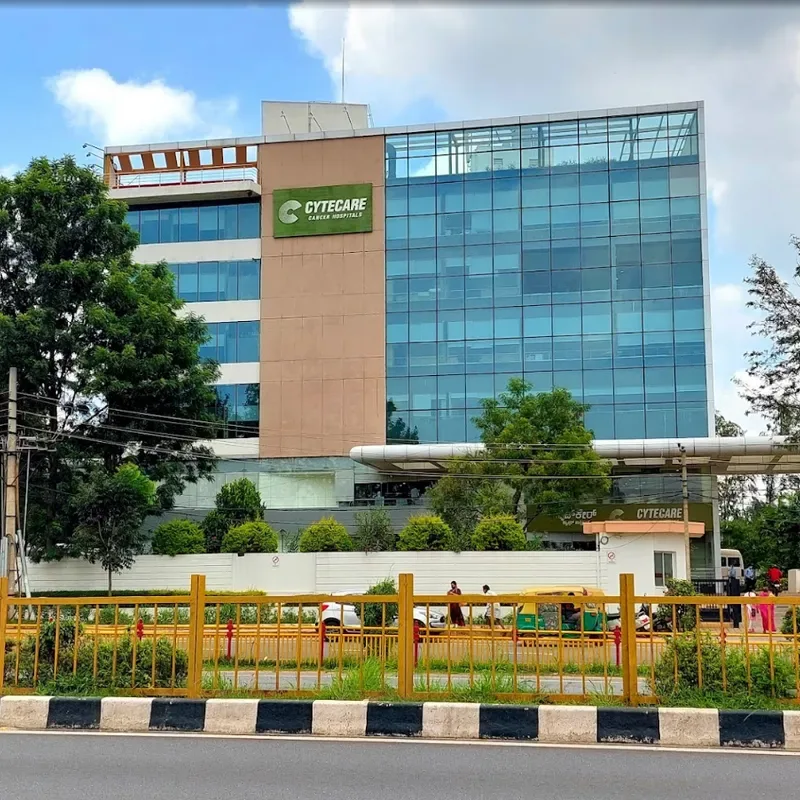
+91 90080 30129Cytecare Hospitals, Venkatala, Near Bagalur Cross, Yelahanka, Bengaluru - 560064
Get directions to Cytecare